

The DustCone is an elasto-mechanical system: the weight of your material regulates its own discharge. Here is what happens inside.
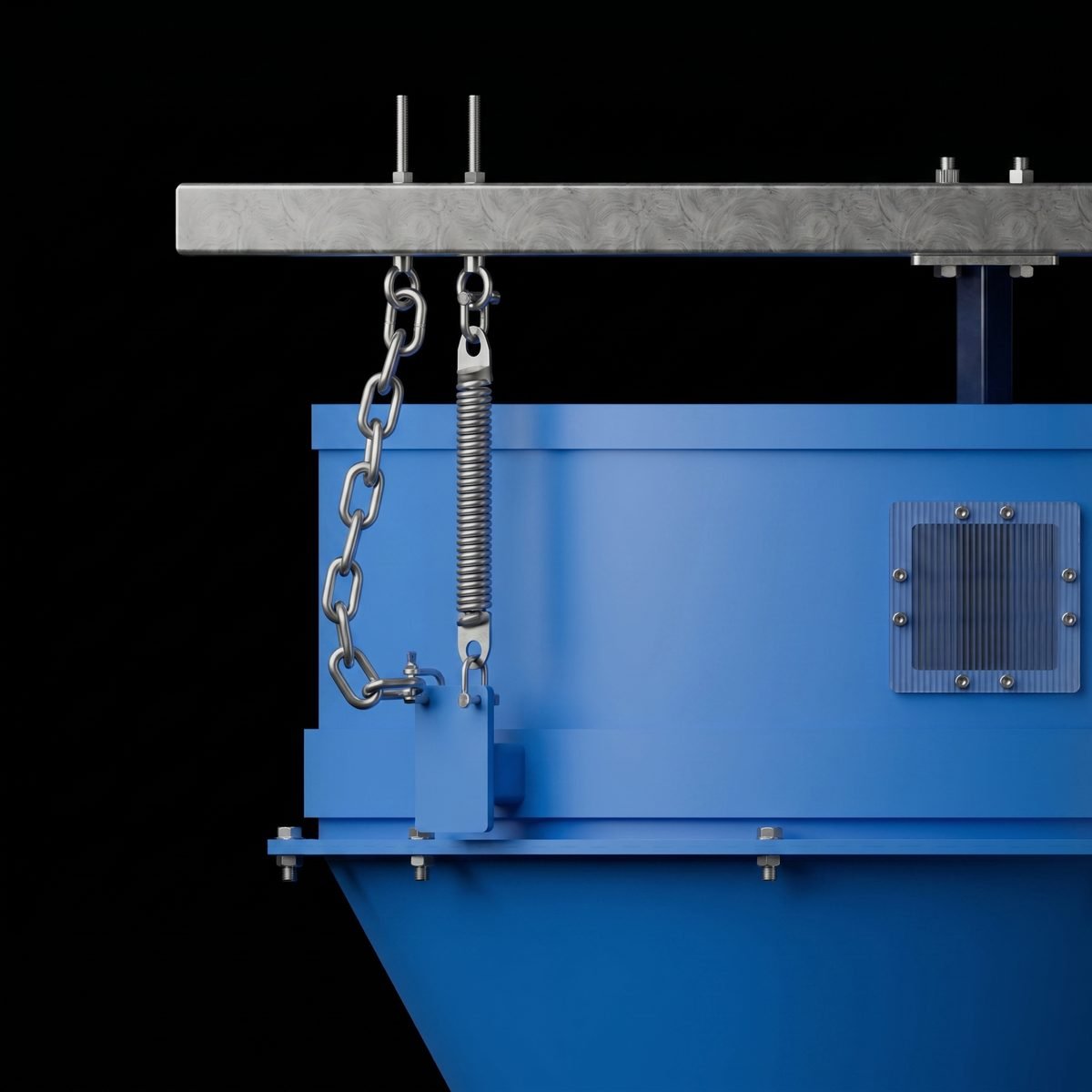
The hopper body hangs from a set of heavy-duty coil springs around a fixed internal cone. Empty, the springs hold the body up and the cone closes the discharge. As material enters, its weight extends the springs and the body descends — opening a precisely controlled annular gap between cone and discharge.
The gap width is proportional to the load. More material, wider gap, faster discharge; less material, narrower gap, slower discharge. The system finds its own equilibrium continuously, with no sensors, actuators or operator input. Spring travel is limited by factory-set chain restraints, so the unit arrives configured for its duty.
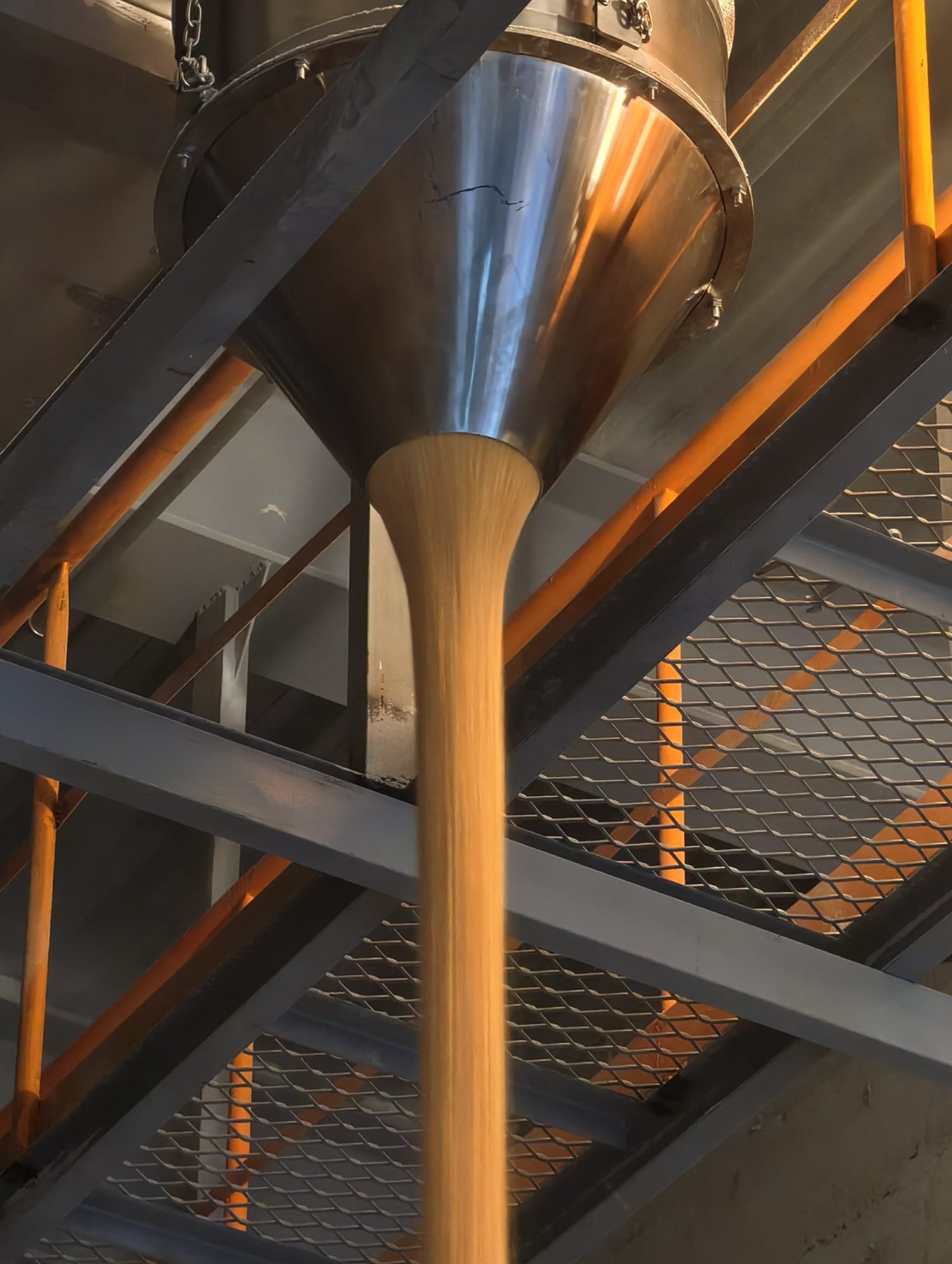
Material falling into a transfer point is full of air — a loose, turbulent mix that sheds fines easily. Inside the DustCone the flow is brought into contact with itself and consolidates, and that air escapes upward.
What comes out of the discharge is a dense, consolidated column. The fine particles are packed in among the coarse ones and travel with the stream instead of drifting off as dust — so they end up on the pile, where they belong.
That has a second consequence worth knowing about: material that arrives mixed rather than sorted packs into a denser, more uniform pile. More on storage density.
Cutaway animation of the loading–consolidation–discharge cycle.
Correct sizing is what separates a hopper that suppresses dust from one that merely slows it down. Every DustCone is dimensioned to its duty using established bulk solids engineering, applied with years of hands-on experience with bulk material transfer.
Target flow rate, bulk density and particle size range — plus feed chute details where an FT has to mate to one. That's all we need to begin.
Discharge geometry, cone angle selection and residence characteristics are calculated for your specific material.
A unit specified to form a reliable solid column across your operating range, with the drawings and mounting details you need to install it.
Mild Steel for standard duty. Corten for weathering service. SS304 and SS316L for food-grade, fertiliser and corrosive environments. Hardox for highly abrasive materials. Optional polyurea coating for combined abrasion and corrosion protection.
Major components are individually replaceable, allowing targeted maintenance with minimal downtime. Inspection windows permit in-service monitoring of the discharge without dismantling. No consumables, no filters, no scheduled parts replacement.
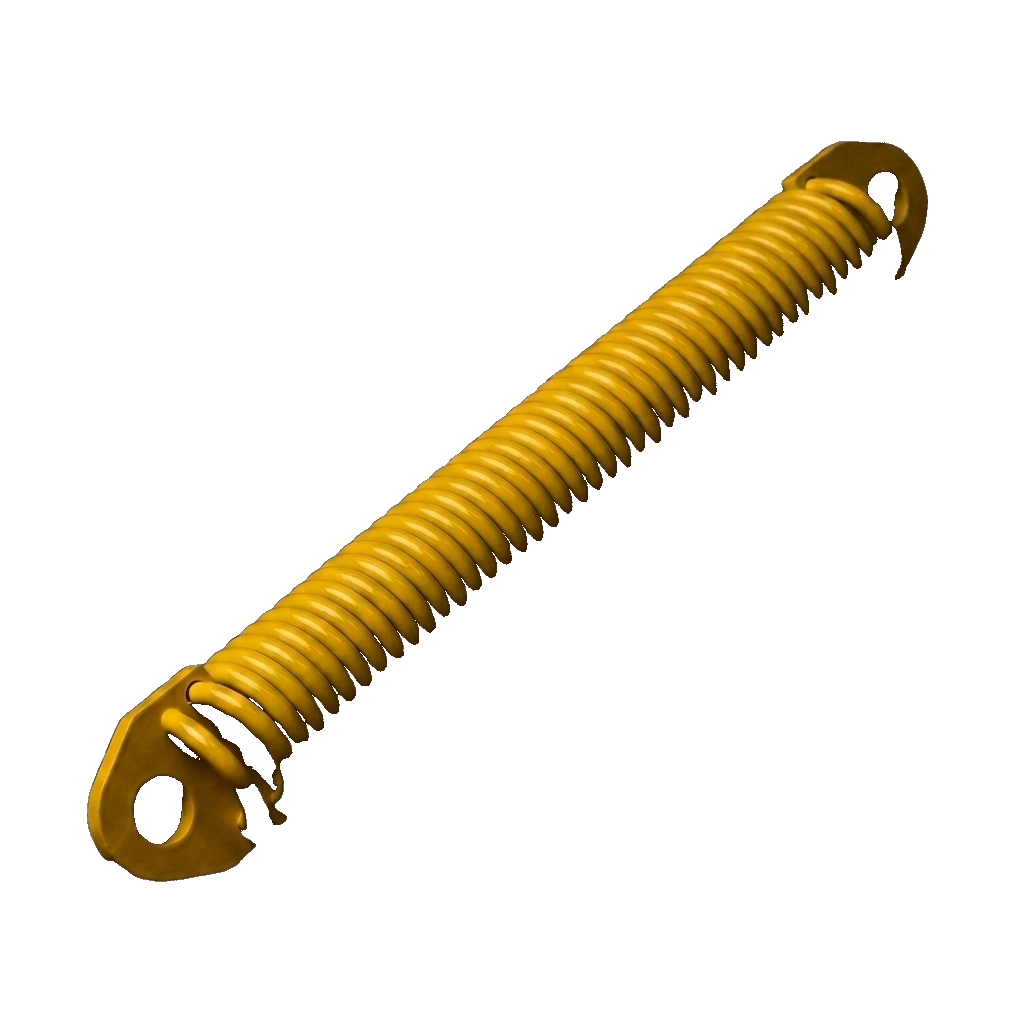
The springs carry the whole hopper and cycle with every load, so we design and make them for this duty rather than order them in — a stamped tab plate where a bent hook would fatigue, and a flexible dip coat where powder coat cracks and hides corrosion.
The flange-top FT bolts directly to a fill chute or silo inlet for a fully sealed transfer — the same mechanism as the open-top DC, in a closed installation.
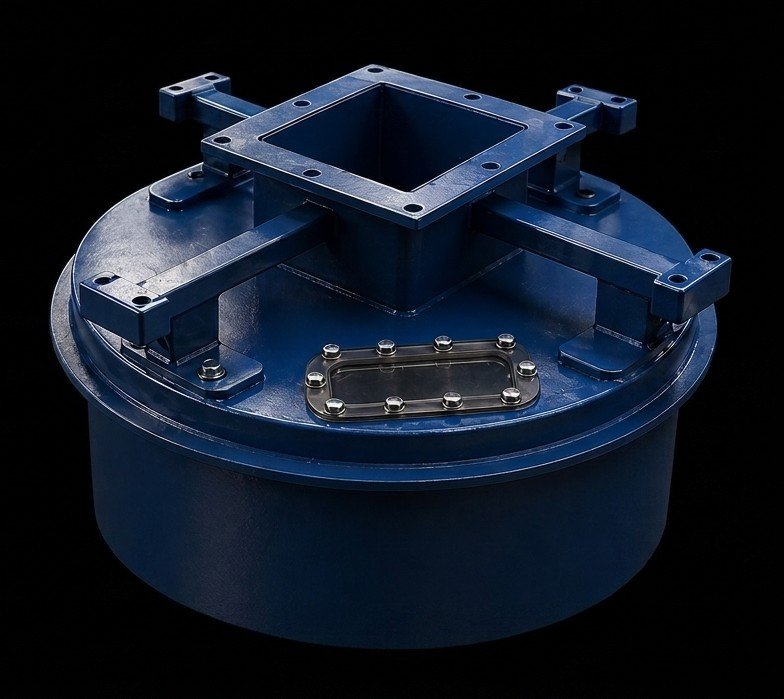
Square inlet flange, bolted mounting arms and a sealed inspection window — installed under an existing chute with no open transfer point.
A dust suppression hopper is fitted at a bulk material transfer point to stop fugitive dust forming. The DustCone discharges material as a dense, coherent solid column rather than a loose aerated stream, so fine particles travel with the material to the pile instead of drifting off as airborne dust.
The hopper body hangs on heavy-duty coil springs around a fixed internal cone. The weight of the material extends the springs and opens a discharge gap in proportion to the load, so the system regulates itself continuously with no sensors, actuators, electrical connection or operator input.
Dry free-flowing bulk materials including grain, oilseeds and meals, fertiliser, soda ash, sulfur, wood pellets and mined minerals. Materials with poorer flow characteristics are accommodated with steeper cone variants and appropriate wall materials.
At any point where bulk material falls from height: ship and barge loading, truck and train loading, warehouse and flat storage loading, and silo or bin transfer. The flange-top DC FT variant bolts directly to an existing chute or silo inlet for a fully sealed transfer.
Three parameters: the target flow rate, the bulk density of the material, and its particle size range. The material name and feed chute details help. DustCone returns an engineered geometry with drawings and mounting details.
Send us your parameters and we'll come back with your engineered sizing within a few working days.