

The site
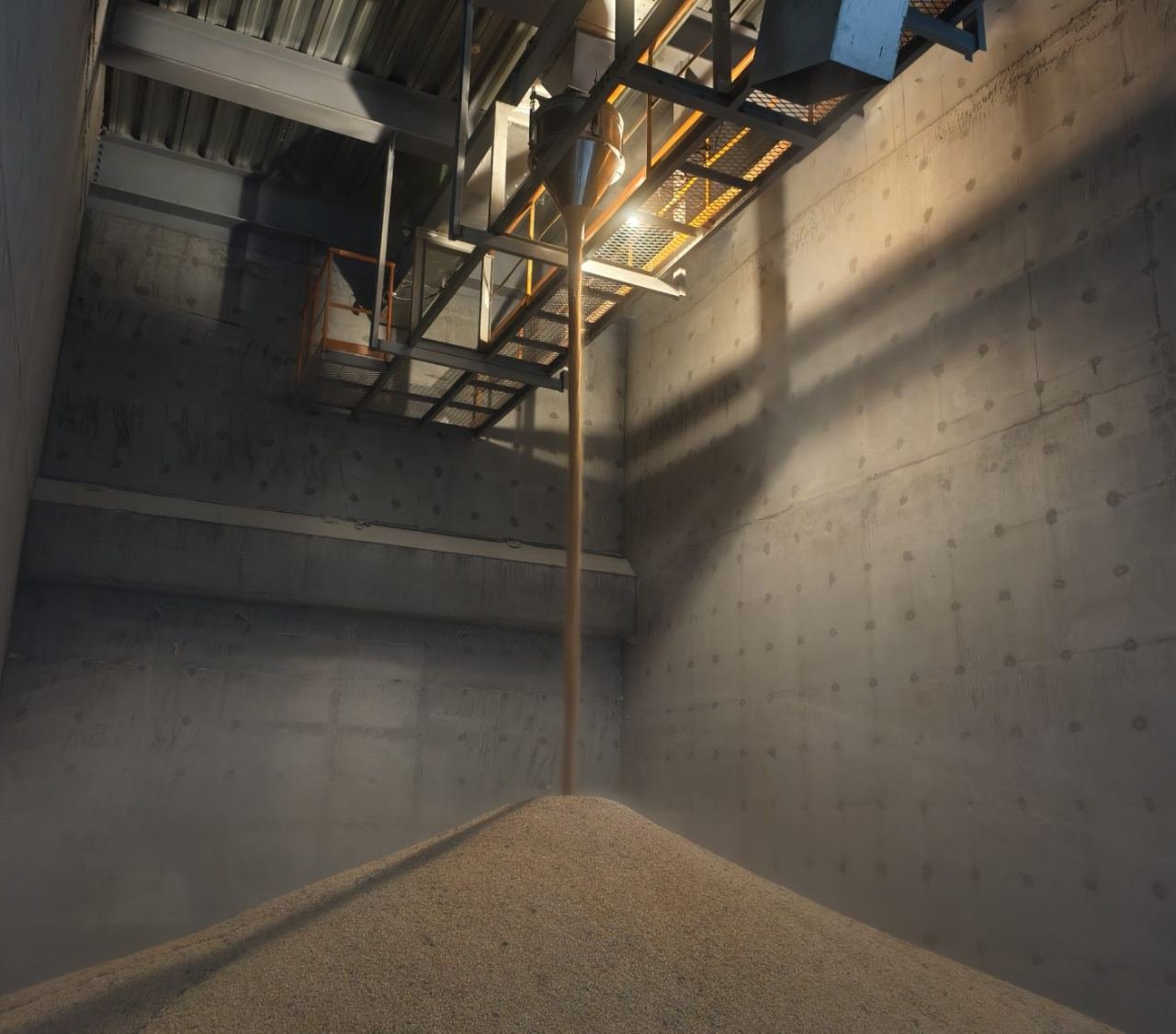
A grain terminal in East Asia receives maize into a row of concrete flat storage bays. Material enters through overhead chutes on a walkway that runs the length of the building, then falls to the bay floor. At the start of filling, that fall is around 6.5 metres.
Each bay was loaded through a bare chute outlet. Nothing was fitted to control the falling stream — no spout, no skirt, no extraction.
The problem
At 6.5 metres of free fall, maize behaves the way any dry granular material behaves. The stream spreads on the way down, air is drawn into it, and the light fraction — broken kernels, husk fragments, field dust — separates out and stays airborne.
The consequences at this terminal were visible and expensive.
Dust filled the loading corridor during intake, to the point where visibility down the length of the building was lost. It settled on floors, walkways, structural steel and stored product. It escaped through the building openings, and the terminal's neighbours began raising it directly with the operator.
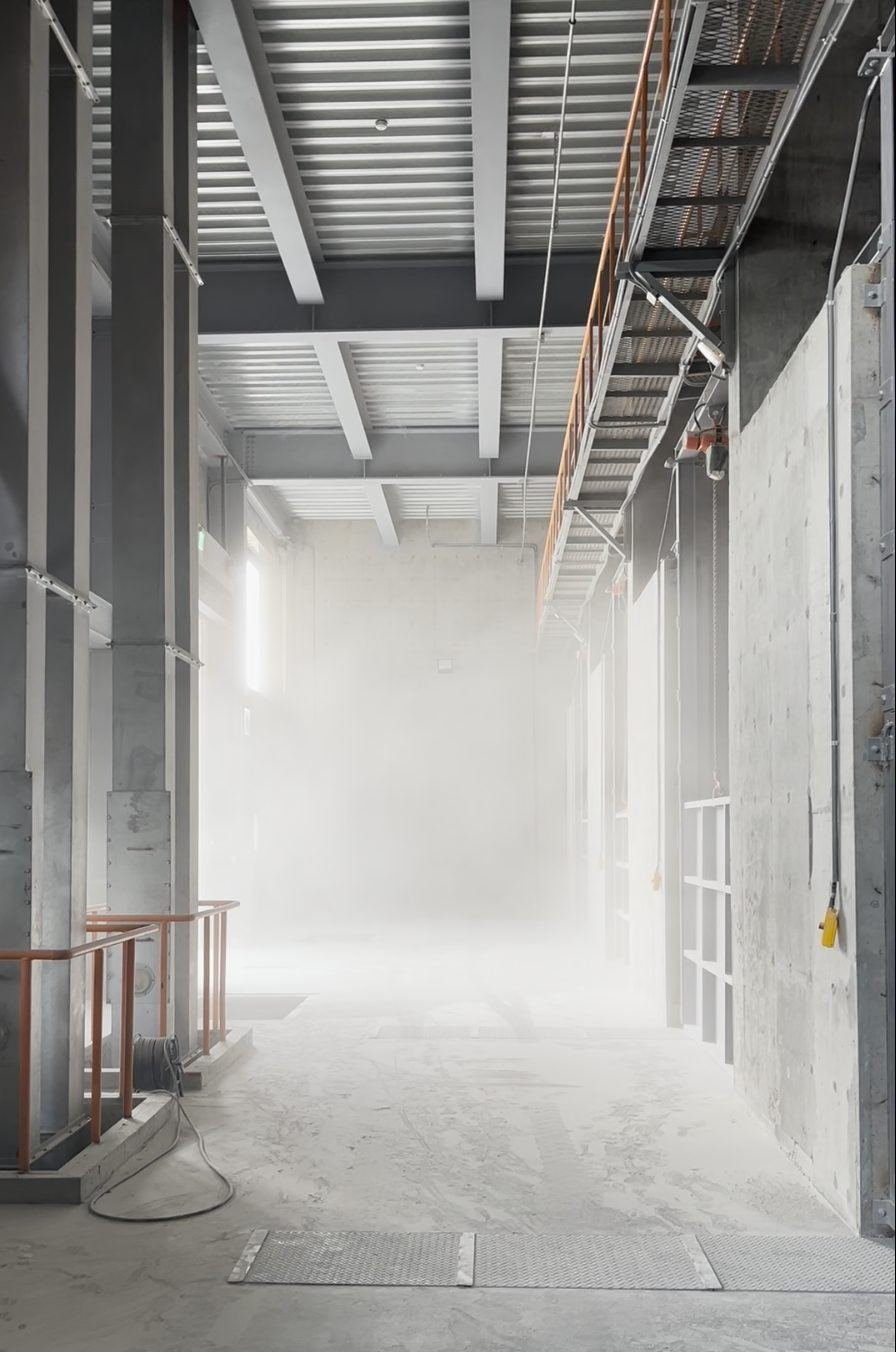
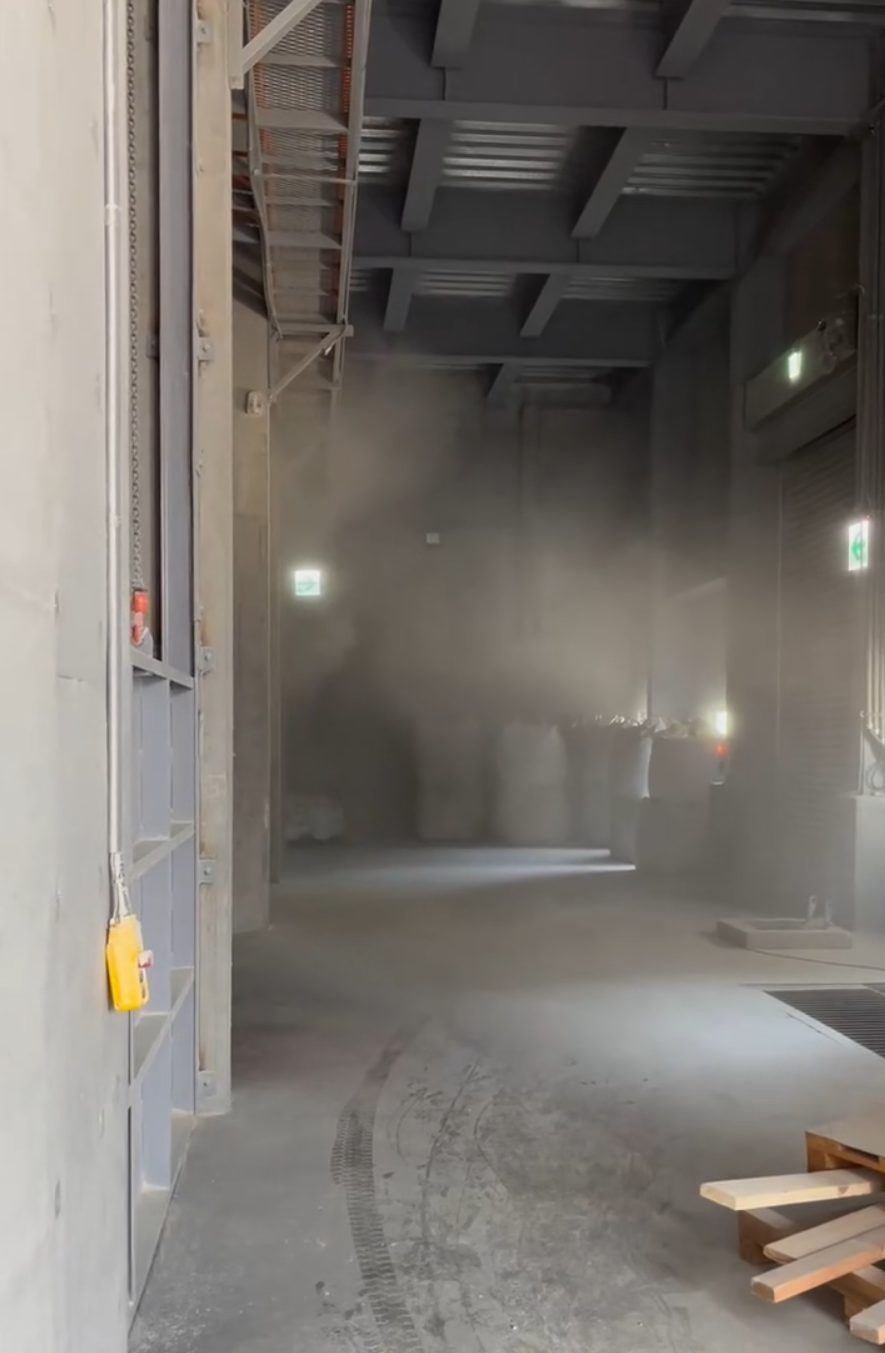
And every particle that went into the air was product that had been bought and shipped but would never be sold. At sustained tonnage, that loss is continuous.
The operator had two problems running at once: a commercial one they could measure on the weighbridge, and a relationship one with the businesses around them that no amount of sweeping was going to fix.
What was installed
Four DustCone DC Mini FT hoppers in SS304, one per bay, at a loading rate of 50 t/h.
The Flange Top (FT) configuration bolts directly to the existing chute outlet, so the installation is a sealed transfer from the chute into the hopper with no modification to the overhead structure. Stainless steel was specified for the food-grade duty and for cleandown.
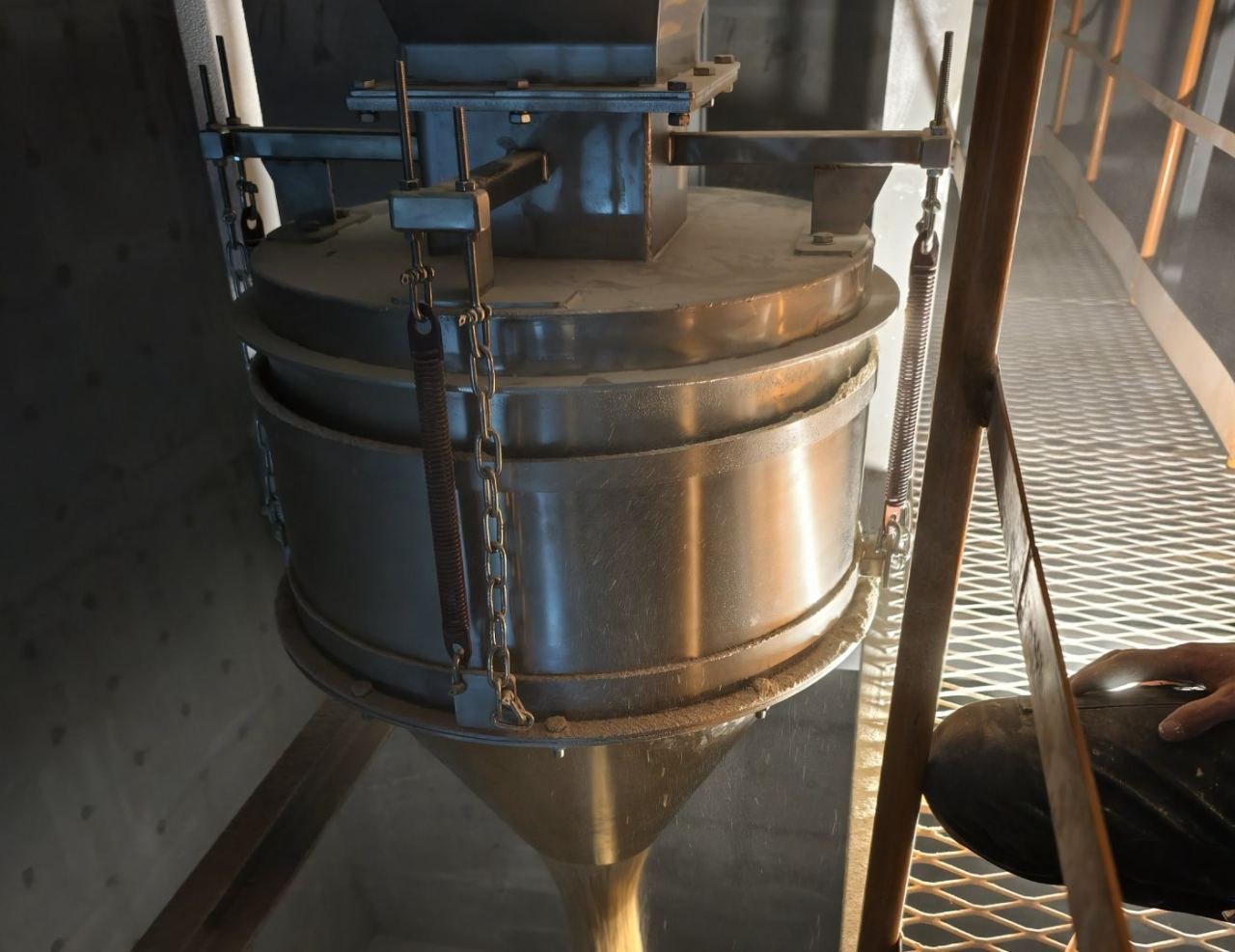
The hoppers are suspended on springs around a fixed internal cone. The weight of the material in the hopper opens the discharge gap in proportion to the load, so the unit regulates itself continuously as flow starts, runs and stops. There is no drive, no sensor, no control panel and no electrical connection. Nothing was added to the building's power or compressed air systems, because nothing was required.
What changed
The material now leaves the hopper as a dense, coherent column and travels the full 6.5 metres to the pile intact. The fines stay inside the moving column rather than separating into the air.
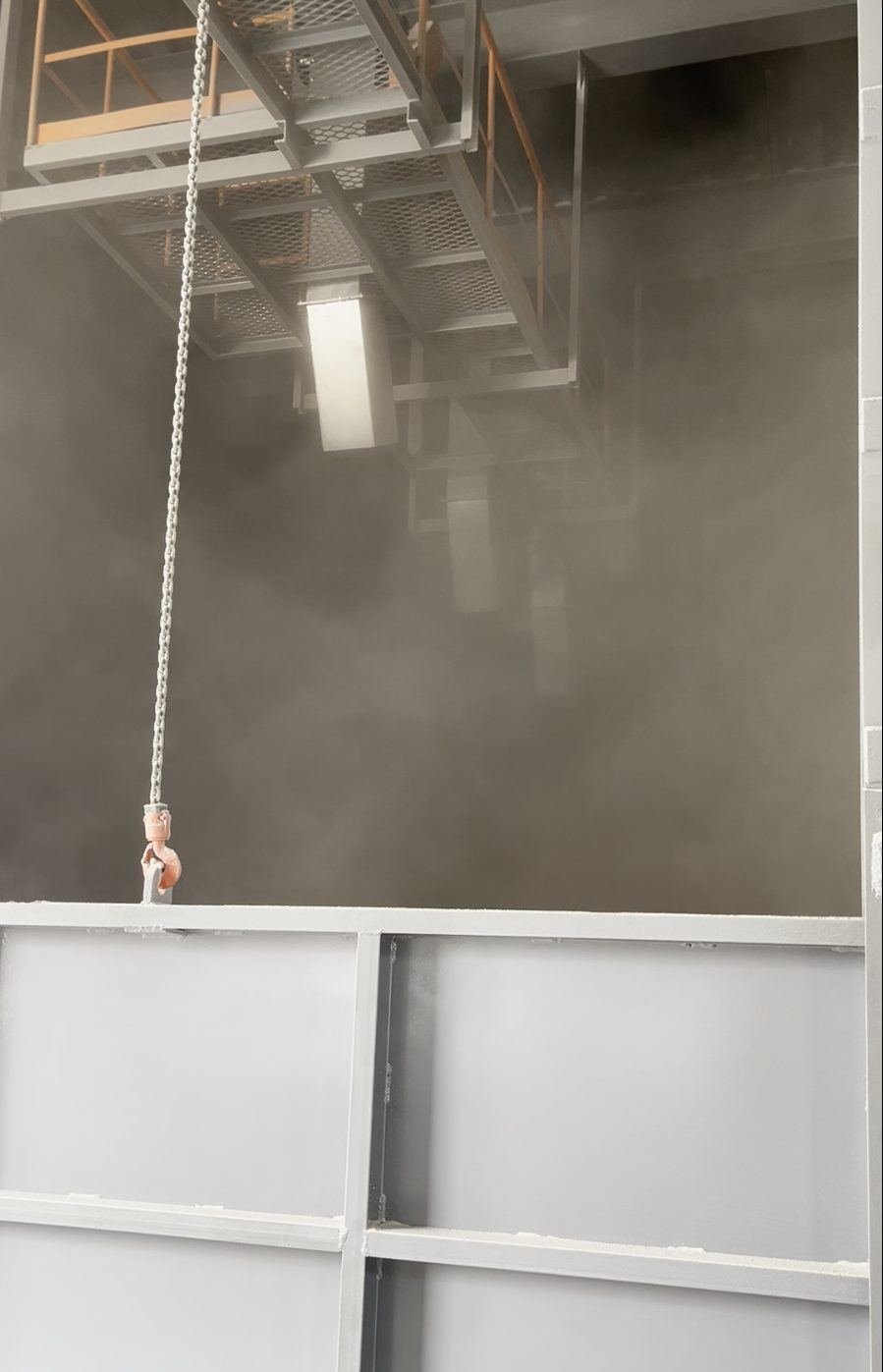
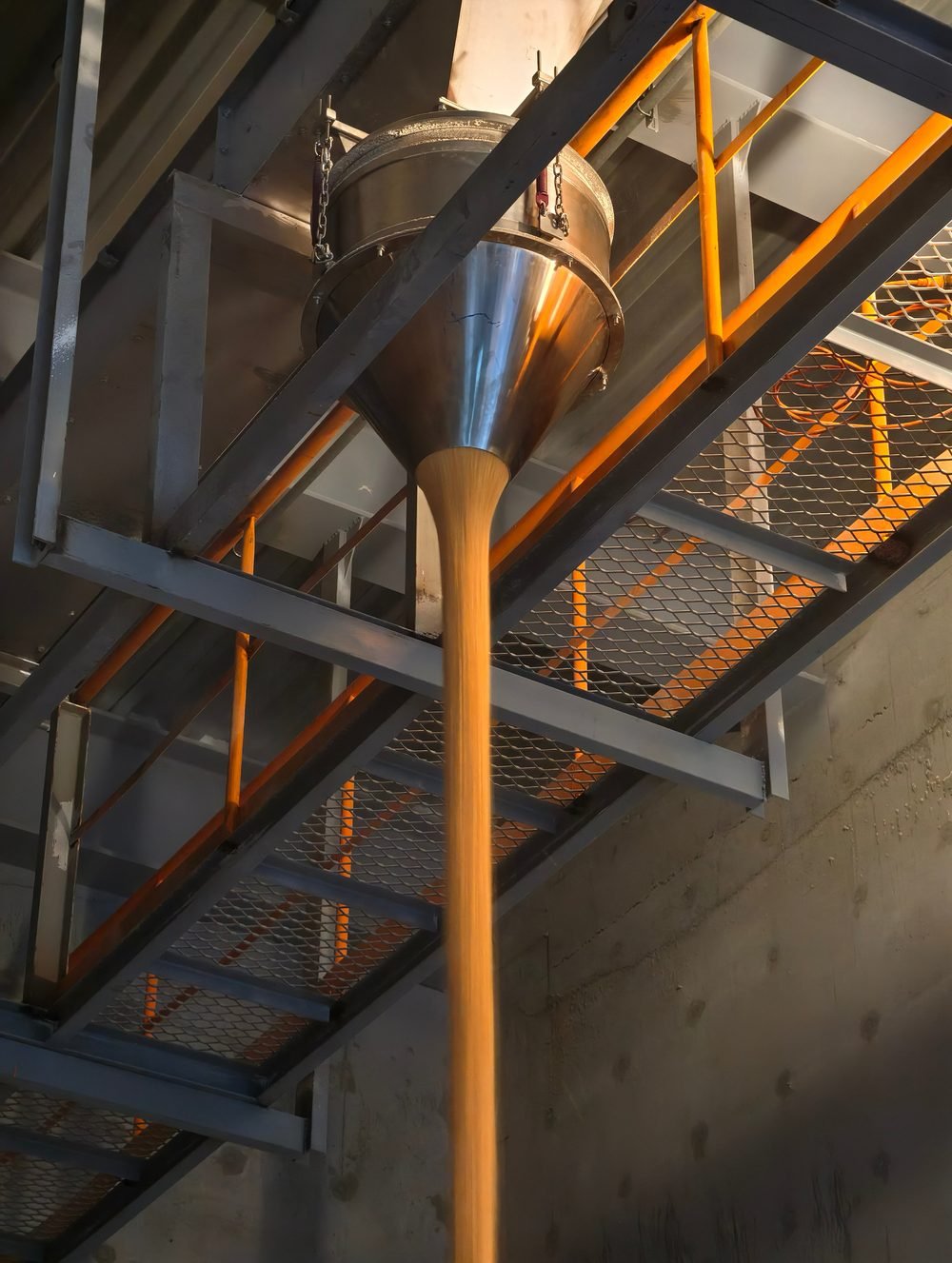
The site reported that both the dust reduction and the change in angle of repose in the warehouse were significant.
A second effect: how the pile stacks
The terminal noticed something they had not asked for.
A freely falling stream sorts itself on the way down. The fines separate out, drift off as dust and settle on the surface, so they are no longer filling the gaps between the coarse grain. The heap that builds is steep, loose and sorted, and it stays that way — a sorted pile does not remix on its own.
Material arriving as a consolidated column is still mixed when it lands. The fines pack into the voids between the coarse particles, and the pile settles lower and wider: it runs out across the bay floor rather than heaping up under the chute.
For flat storage that has a direct operational consequence. A steep pile peaks under the fill point and leaves the ends of the bay short, so the bay has to be filled from more than one position to be filled at all. Each bay here had previously been filled from two points. With a single DustCone on each bay, the site has been able to fill from one — less repositioning during intake.
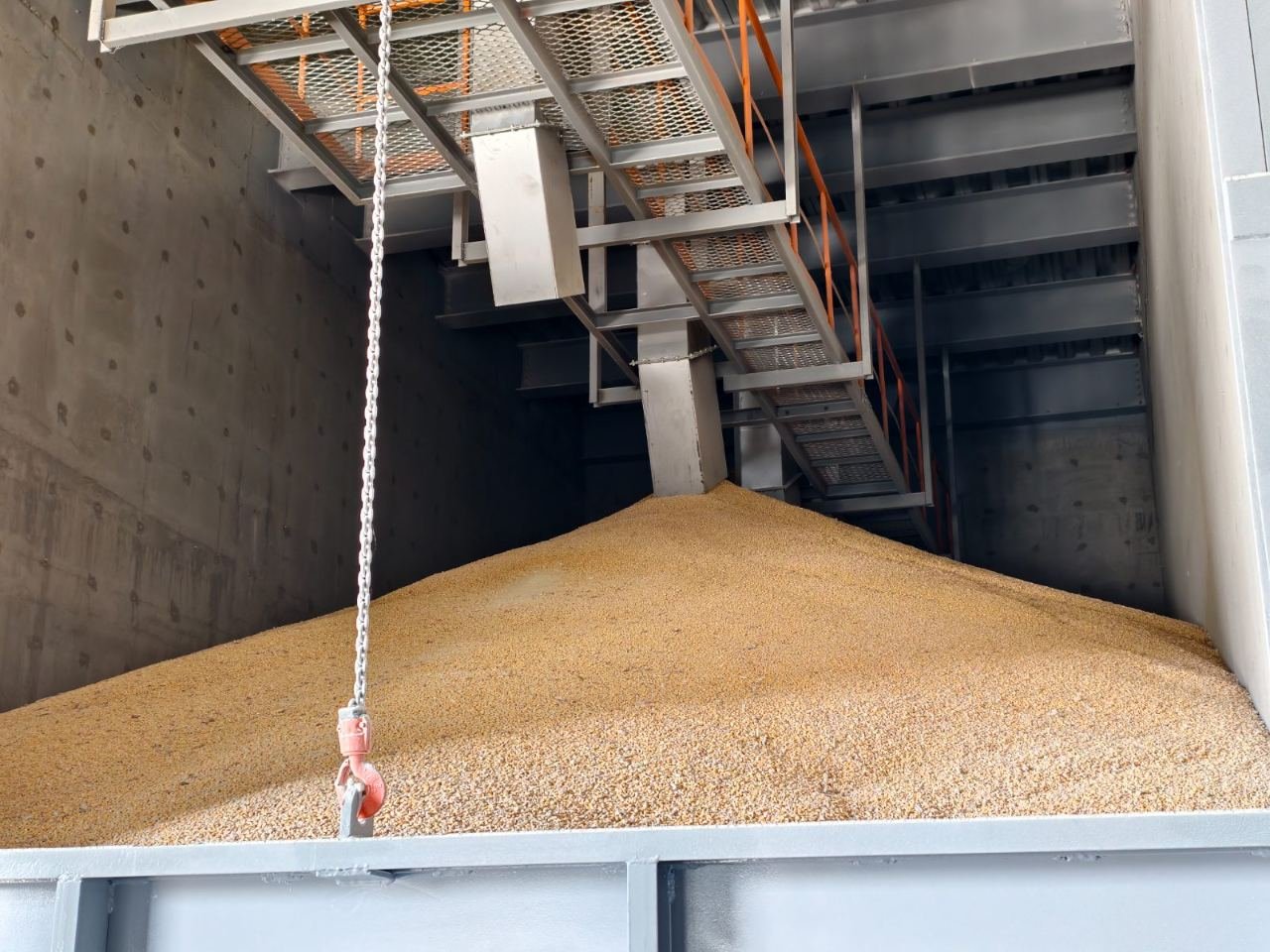
The same tonnage also occupies less room, for the same reason: the voids are filled rather than open. We have not published a figure for that and will not until it has been measured properly — the mechanism is set out here.
Two further units are planned for the soybean meal bays — a dustier material than maize, and the reason the terminal wanted to see the system running on corn first.
Why it works without power
The mechanism is mechanical and self-adjusting. Material entering the hopper builds a load; that load extends the springs; the discharge gap opens by exactly as much as the flow demands and closes again as it falls away. Because the material discharges as a consolidated column rather than an aerated stream, there is far less opportunity for fines to be entrained and carried off.
Maintenance is periodic inspection of the springs. There is no filter to change, no fan to run, no water to supply and no consumable to buy.
Sizing takes three parameters: material, bulk density and flow rate. Send those to sales@dustcone.com and we will return a model recommendation and installation dimensions.